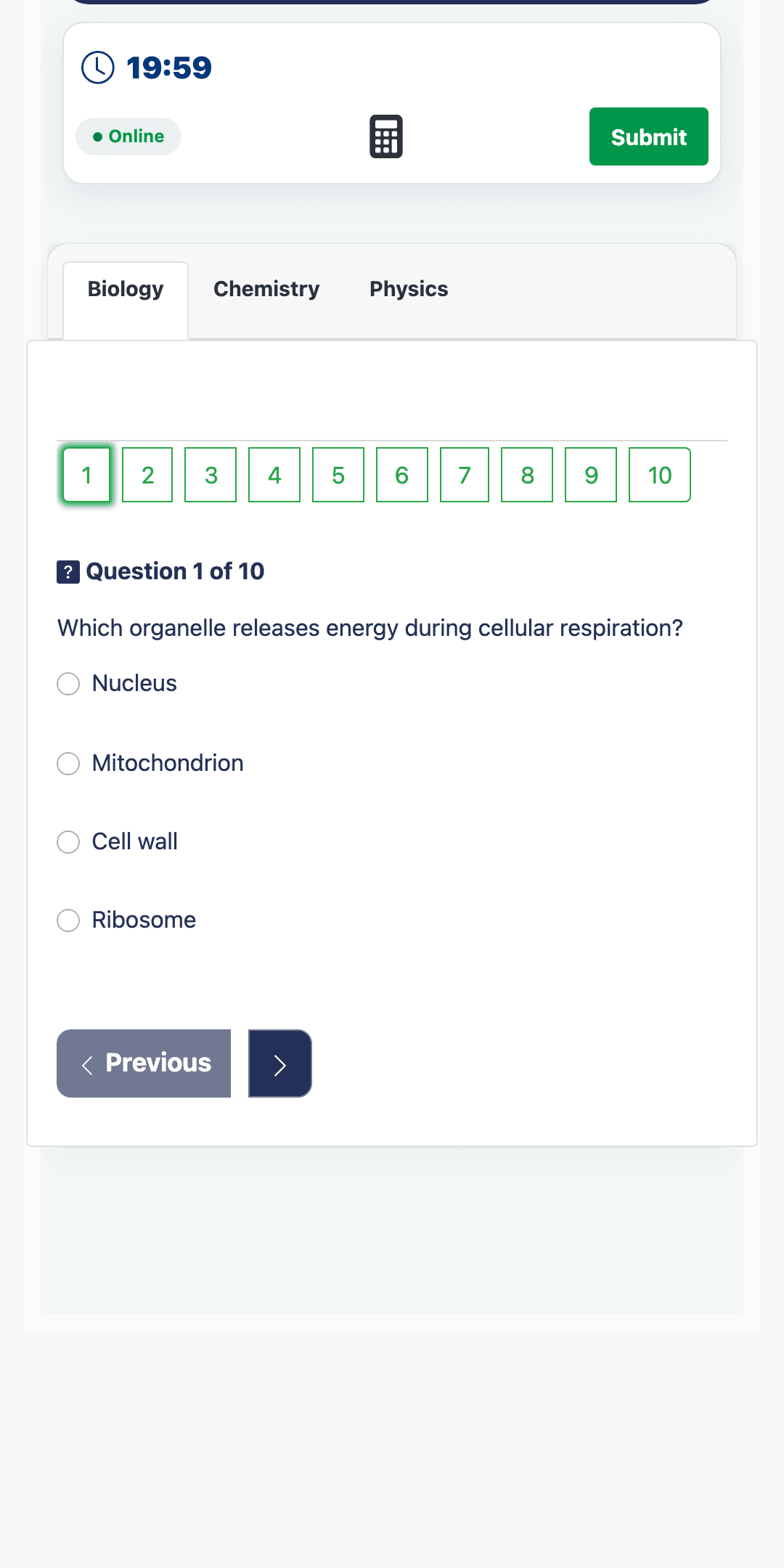

A high JAMB score rarely comes from reading for long hours without direction. It comes from knowing the syllabus, practising the way the examination works and using every result to decide what to improve next. The strongest plan is simple enough to repeat even on difficult days.
Start with the official syllabus and a baseline test
List every topic under your four subjects, then take one timed mixed practice before drawing up a timetable. The result shows where marks are currently being lost. Separate weak topics from careless errors and slow questions so that your study hours solve real problems rather than merely revisiting comfortable chapters.
Build a weekly practice rhythm
Give weak subjects more sessions without abandoning your stronger ones. A useful week contains focused topic practice, a timed mixed test and a dedicated correction session. Short, consistent sessions are more valuable than an exhausting weekend marathon that leaves no time to understand mistakes.
Practise speed without sacrificing accuracy
First learn to solve a question correctly, then reduce the time gradually. During full mocks, use a planned subject order and move past questions that are consuming too much time. Return only after securing the marks available from questions you can answer confidently.
Review every result like a coach
Do not record only the total score. Note the topic, why the chosen option looked attractive and what rule or fact would have produced the correct answer. Quicktest practice results make this review easier by helping you see patterns and choose the next useful practice session.
A practical checklist
- Start with the official syllabus and a baseline test
- Build a weekly practice rhythm
- Practise speed without sacrificing accuracy
- Review every result like a coach
What progress should look like
Look for steady evidence: fewer repeated mistakes, stronger topic scores, better use of time and a clearer reason for every answer. One result may rise or fall for many reasons, so compare several sessions. If progress stalls, reduce the scope, repair the weakest concept and practise again before adding more material.
Put the plan into practice
The most useful next step is a small one you can repeat. Choose a topic, take an honest practice session, review the result and let the evidence shape tomorrow's work. Quicktest brings exam practice, explanations, AI-supported study and progress insights into one learning flow.